Workday lunches on treatment: simple routines that still work
When appetite feels quieter during medically supervised weight-management treatment, the workday lunch can feel awkward. Practical desk and break-room habits, what to pack, and what to bring to clinical review — without outcome promises.
- workday
- lunch
- appetite
- habits
- clinical review
Quick answer
A workday lunch is not a treatment itself, and a different midday meal does not guarantee a particular weight or body-shape outcome. During a medically supervised weight-management pathway, quieter appetite can simply mean smaller portions, clearer packing habits, and less pressure to match colleagues’ plate sizes.
If skipping lunch, dizziness after long gaps without food, nausea around break times, or stress about eating at work shows up often, note the pattern and bring it to clinical review. Your prescribing clinician decides what fits your situation — this article is educational support, not individual medical advice.
Why lunch at work can feel different on treatment
Many people notice that the canteen queue, shared desks, or meeting-heavy days feel louder when hunger cues are quieter, smells are stronger, or a full plated lunch no longer matches how much feels comfortable. That shift is common in everyday life during a clinical pathway; it is not a scorecard of success or failure.
Workday eating also sits next to hydration, protein, fibre, and meal timing — topics your care team may already discuss. A calmer lunch routine supports nourishment through the afternoon; it does not replace clinical review or change prescribed treatment on its own.
Pack or plan before the rush starts
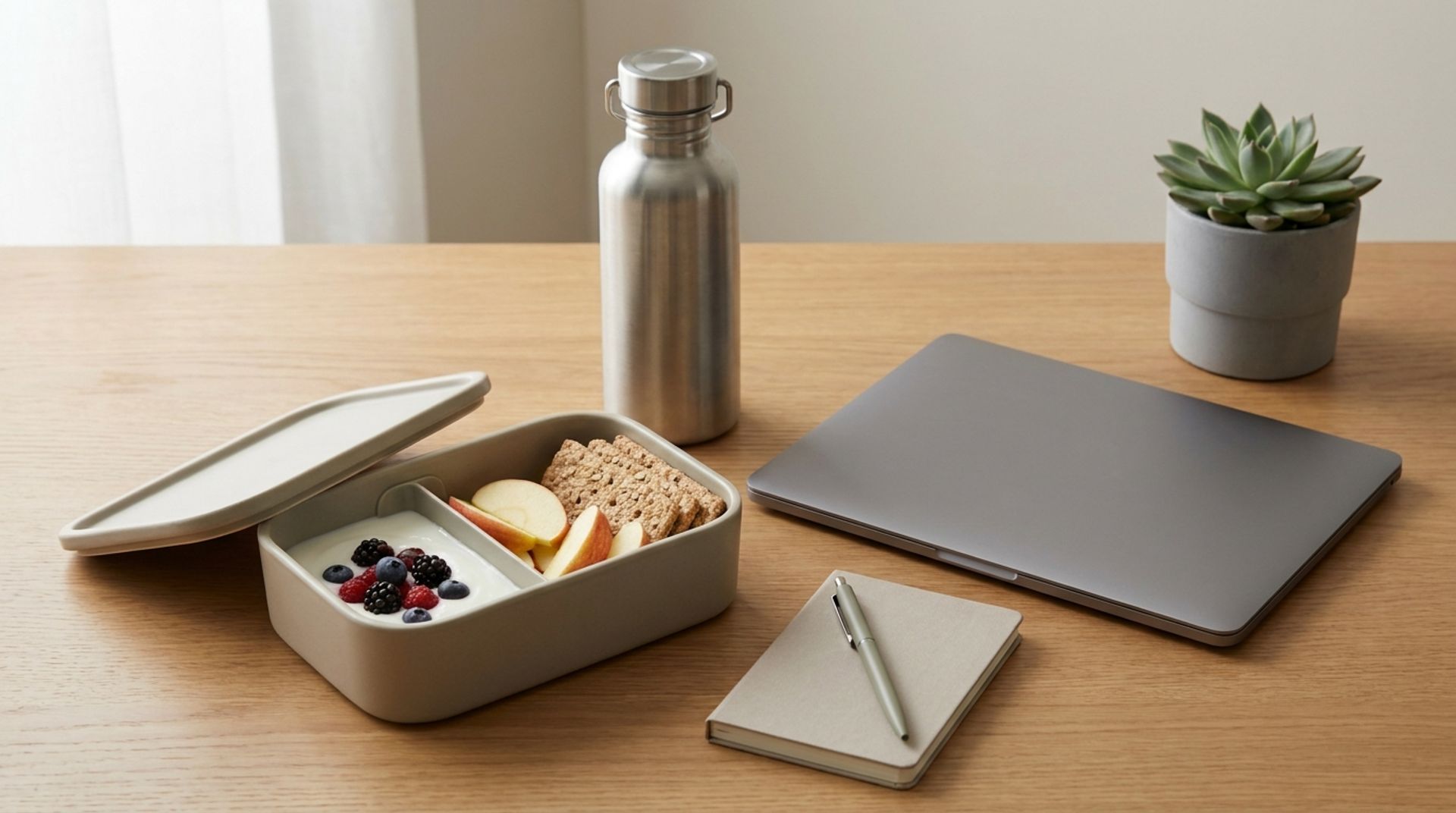
Decide the night before or in the morning what a manageable lunch looks like — not a perfect Instagram plate. Aim for something you can finish while it still tastes appealing: a smaller packed meal, a ready-to-assemble option from home, or a canteen choice you already know sits well.
Include a protein-rich element you tolerate (for example yoghurt, eggs, tinned fish, tofu, cheese, lentils, or leftover cooked beans), some fruit or vegetables, a higher-fibre carbohydrate if that feels comfortable, and a drink you find easy to sip. Public guidance such as the NHS Eatwell Guide and the German Nutrition Society (DGE) recommendations emphasises variety across food groups over any single “superfood”.
If packing feels heavy some days, keep a short “fallback list” of workplace or nearby options that are smaller or easier to portion — soup, a half sandwich, a salad you can leave half of, or a snack-style lunch you can eat slowly. That is practical flexibility, not a rule you must follow.
At the desk or in the break room
Give yourself a real pause when you can: step away from the screen for a few minutes, eat at a pace that feels steady, and stop when comfort says enough — even if colleagues still have food on their plates. You do not need to explain your portion size to anyone.
If meetings stack through midday, protect a short window for food and fluids rather than waiting until late afternoon. Long gaps can leave some people light-headed or more uncomfortable later; if that pattern repeats, it is useful to mention at clinical review.
Front-of-pack labels and canteen menus can help you compare similar choices for fat, sugar, and salt when you want a quicker decision. They are everyday tools for balance, not a requirement to count every nutrient at your desk.
When to call your care team
Contact your care team promptly for severe or worsening symptoms — for example persistent vomiting, inability to keep fluids down, fainting, severe abdominal pain, chest pain, or breathing difficulty. Seek urgent care when symptoms feel acute or unsafe.
Bring milder but ongoing issues to the next clinical review: regularly skipping lunch because nothing feels manageable, work stress that leads to under-eating, dizziness on meeting-heavy days, or confusion about which midday options still sit well. Your prescribing clinician can help you plan.
Do and don’t
Practical workday lunch habits while appetite feels different on treatment.
- Do plan a manageable midday option the night before or in the morning
- Do favour smaller portions and easy-to-assemble protein, fruit/veg, and fluids
- Do protect a short pause to eat and drink even on busy meeting days
- Do ask at clinical review if skipping lunch or work-related under-eating keeps showing up
- Don’t treat a desk lunch as a guarantee of weight or body-shape outcomes
- Don’t force a full canteen plate if a smaller or slower meal feels more manageable
- Don’t stop or change treatment because of workday eating habits without clinical advice
- Seek urgent care for persistent vomiting, fainting, severe pain, or inability to keep fluids down
Frequently asked questions
Educational caveat
This Journal piece is for general education about everyday workday lunch habits during a medically supervised weight-management pathway. It does not diagnose, prescribe, or promise results. Suitability, dose changes, and personal dietary limits are decided by your prescribing clinician after clinical review.
Sources and medical review
Based on general public nutrition guidance on balanced everyday eating and food groups, plus educational framing for medically supervised weight-management pathways. Educational only — not individual medical advice. Reviewer left empty pending medical sign-off.